RecoverIT
AI interprets messy evidence. Deterministic workflow state controls consequential actions. Humans approve high-risk changes.

0→1 product development across backend systems, APIs, AI workflows and automation — with a bias toward shipping and a habit of designing for failure.
Interpret → structure → verify → act.
Four flagship builds showing how I move from an ambiguous problem to a working product: architecture, APIs, AI workflows, reliability controls and user-facing delivery.
AI interprets messy evidence. Deterministic workflow state controls consequential actions. Humans approve high-risk changes.

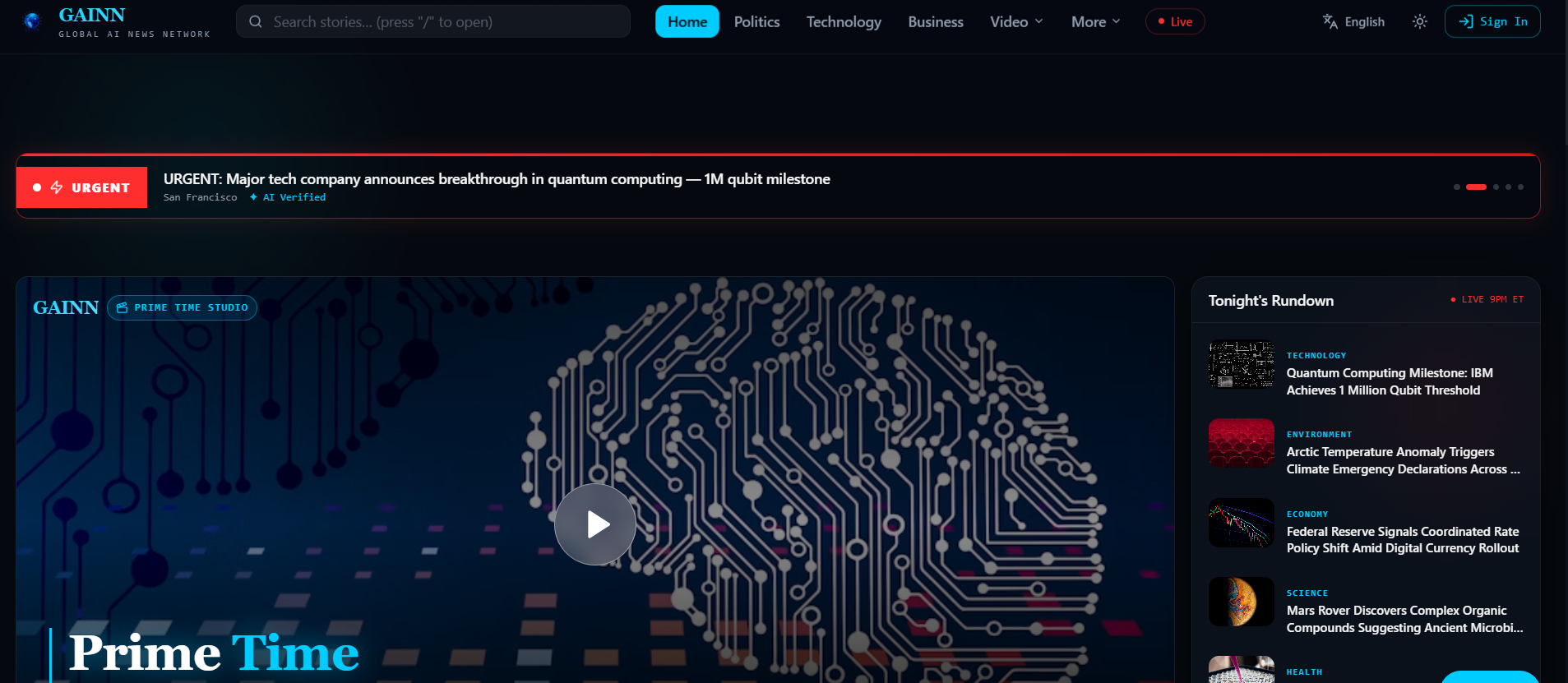
A multi-agent news pipeline that separates drafting from quality control so publishing is not one opaque generation pass.

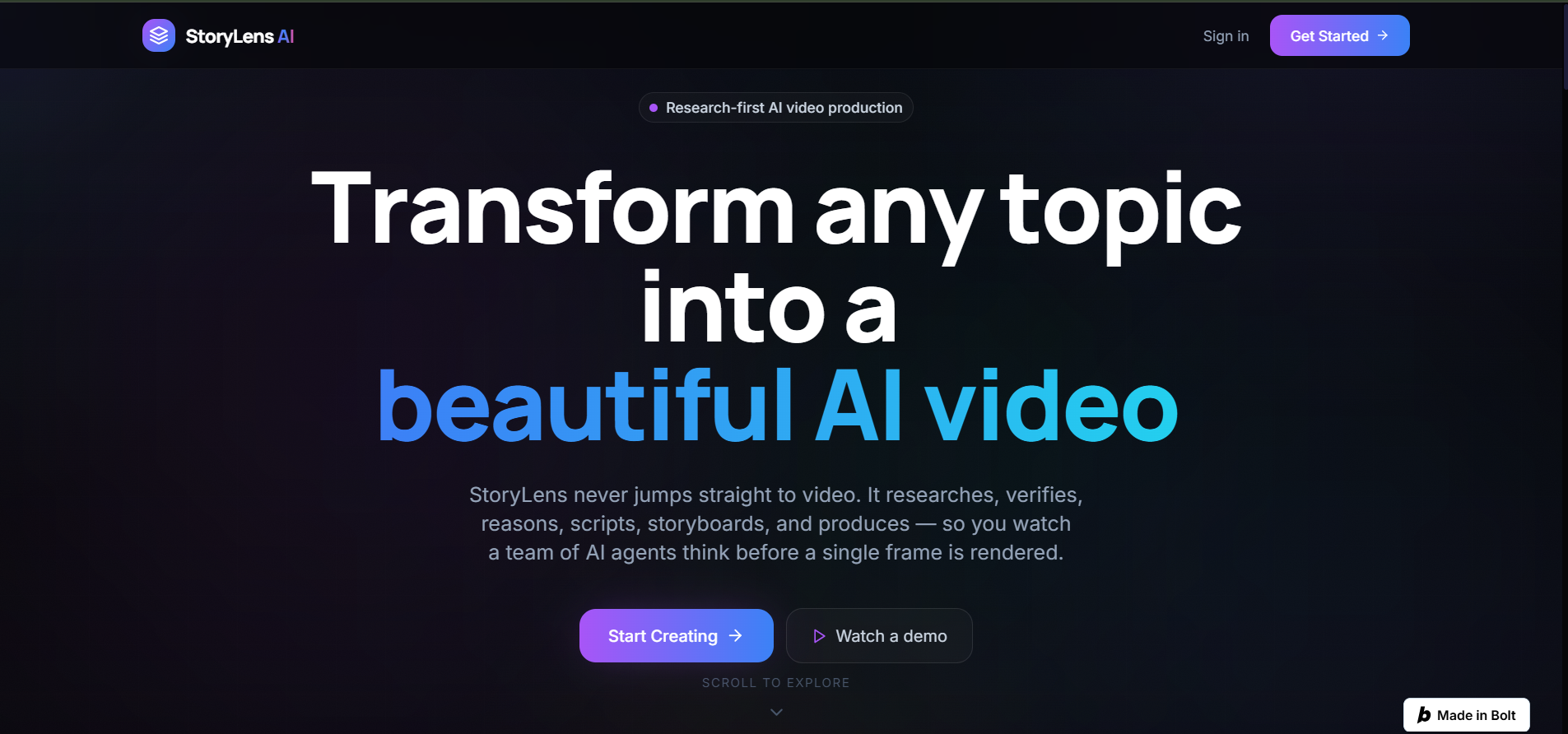
A research-to-video pipeline that separates retrieval, cross-verification, entities, narrative synthesis and animated output.

A reproducible fleet-event pipeline that measures freshness, retries, conflicting replays, unchanged readings, offset continuity and expected-signal cadence — with explicit safeguards against claiming more than the data proves.
A compact timeline: two environments, two kinds of ambiguity, one habit of learning the system underneath the task.
Worked on training-data quality for imitation learning and Vision-Language-Action (VLA) models.
Conducted security assessments across internal and web systems.
Automated evaluation across GPT, Claude, DeepSeek and Gemini with LLM-as-a-Judge scoring, FastAPI, Streamlit, LiteLLM and PDF reporting.
Unsupervised Autoencoder + Isolation Forest across a simulated LHC-style dataset, with a React / TypeScript dashboard for inspection.
Ten exploratory essays on multimodal interaction, voice and silence, agent autonomy, memory, multilingual interfaces, ambient AI, social agents and human capability.
The point is not the list. It is how the layers connect: research → model → API → workflow → product.
Move through the layers. The same principle appears across the projects: turn uncertain inputs into something a deterministic system can use.
ET GenAI Hackathon — approximately top 0.02% of participants.
Selected delegate, Harvard Project for Asian and International Relations.
B.Tech, Information Technology · Bharati Vidyapeeth College of Engineering, Pune.
AI systems, product engineering, research, automation and security.

I’m Prakash Chand Jain, a full-stack engineer and AI product builder who likes taking ambiguous ideas and turning them into working systems.
My work crosses backend engineering, AI orchestration, automation, research and security. I care about the layer underneath the interface: APIs, data, state, failure modes, recovery, verification and what keeps working after launch.
I’m strongest where there is no clean playbook yet: shaping the product, choosing the architecture, wiring the integrations, building the workflow and shipping the useful version quickly.